
Books come alive when they reach the hands of readers. In this section, we highlight genuine reader feedback—thoughts, impressions, and reactions from audiences who have experienced our authors’ work.
These reviews reflect how stories resonate beyond publication: what readers loved, what moved them, and why certain books stayed with them long after the final page. From emotional connections to compelling storytelling and memorable characters, reader insights offer a powerful look at how each book is received in the real world.

The Virgin Couple by Emmanuel Nicholas Abakah centers on Ewura Efuwa and her husband, Ebow Kobena Dadzie, a devoted Ghanaian couple whose ten-year childless marriage becomes the focus of constant scrutiny within their community. Though deeply committed to one another, the couple cannot escape the social expectation that marriage must ultimately produce children. Their private struggle soon evolves into a public concern as relatives, neighbors, and elders increasingly interfere in their lives, convinced that something unnatural lies behind Ewura Efuwa’s inability to conceive.
As Ebow seeks help through modern medicine with the support of the compassionate Dr. Aubed, Ewura Efuwa’s mother, Maame Mansa, firmly believes spiritual forces and jealous family members are responsible for the problem. Her determination to involve traditional healers creates growing tension between faith and science, tradition and modernity, as the couple struggles to preserve their peace amid mounting external pressure.
Abakah’s prose is deeply rooted in oral storytelling traditions, using extended dialogue, proverbs, and philosophical exchanges to explore marriage, family obligation, religion, and cultural identity. Though the pacing occasionally slows due to repetitive discussions, the novel’s emotional sincerity, vivid cultural atmosphere, and sympathetic central characters make it a thoughtful and engaging examination of love under societal pressure.
An emotionally earnest and culturally immersive family drama that thoughtfully examines the collision between love, tradition, and societal expectation.
The Virgin Couple succeeds most convincingly as a sociocultural study of marriage, fertility, and communal surveillance within contemporary Ghanaian society. Abakah constructs a narrative in which infertility becomes not merely a medical concern but a symbolic crisis tied to lineage, identity, and womanhood itself. The novel’s extended dialogues occasionally strain narrative economy, yet they also serve as repositories of oral tradition, proverbs, and competing worldviews. Ewura Efuwa emerges as a compelling emotional anchor whose quiet dignity resists the increasingly invasive pressures around her. Thematically dense and culturally textured, the novel rewards patient readers willing to engage with its philosophical and moral debates.
— Mateo Garcia
Abakah delivers a bold examination of how societies weaponize expectation under the guise of tradition. What begins as a domestic story about infertility evolves into a larger conversation about cultural inheritance, gendered obligation, and the uneasy coexistence of modern medicine with spiritual belief. The novel occasionally overstates its arguments, but its ambition is undeniable. Few contemporary family dramas tackle these tensions with such unwavering seriousness.
— Felix Navarro
This book turns a private marriage crisis into a full-blown emotional battleground. Witchdoctors, family meddling, gossiping neighbors, medical uncertainty—every chapter keeps tightening the screws on Ebow and Ewura Efuwa. The story sometimes lingers too long in conversation, but the emotional stakes stay high throughout. There’s real power in how fiercely the couple fights to protect their love while the world keeps trying to define their marriage for them.
—Eleanor Smith
Okay, this book gets all up in the messy intersection of love, culture, and family pressure. Like, Ewura Efuwa and Ebow are genuinely sweet together, but everybody around them has opinions about their childlessness—and nobody knows how to mind their business. The back-and-forth between modern medicine and spiritual beliefs makes the whole thing feel super layered instead of preachy. It’s definitely dialogue-heavy, but the drama stays juicy the whole way through.
— Rina Cole
Boom! This novel absolutely pokes at the fear of being judged by your own community. One minute it feels like a tender love story, the next it spirals into suspicion, gossip, spiritual panic, and emotional chaos. Maame Mansa especially messes with your head because her desperation comes from love even when it turns destructive. Some scenes go long, sure, but the emotional intensity keeps crashing forward like a storm you can’t walk away from.
— Darren Pike
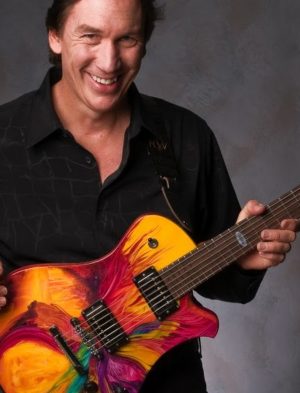
Bob Miles and his wife Janet reside in Southeast Pennsylvania.They are the parents of two Chinese-American children. Bob has worked as a professional guitarist and is the creator/host of Miles of Music (formerly, World of Guitar) television series. Miles of Music has aired on television for close to 25 years and in many markets including Nashville, Tennessee and Los Angeles, California. Bob has been honored twice by the New York Coalition for Healthy School Food and Once by The Pearl S. Buck Foundation. Bob also holds two Grammy certificates.
Let us talk about your publishing plans consultation is FREE!
You have held on to your story for so long or perhaps you have just started to think about writing–wherever you might be in your publishing journey, we can walk with you.
It’s time to embrace your destiny and transform your thoughts and ideas into a book. The path may be unfamiliar; for some, it can be scary. But anything of great value is worth your while–and ours. And we at EXPRESSO Publishing are ready to help you buckle up.
There is so much to do: laying out of your work, getting it copyedited, choosing a cover that will capture your vision and anything else that you can think of. Or even those that you have not thought of yet. We can help.
Fill out the form on this page and talk to our publishing consultants. Let us chart your book publishing journey today.
Got a book that you want to publish? Or are you interested in promoting a book you published elsewhere?
Do you need directions on how to get started? Do you want to talk to a publishing consultant here at EXPRESSO?
Fill out the form on thispage and allow us to help you today.
The juxtaposition of celestial perfection and terrestrial corruption in Xiong’s narrative offers a compelling study of dualism. The text operates less as a traditional fantasy adventure and more as a sociopolitical allegory, particularly in its exploration of “greed” as a contagion that disrupts the balance of “All Things.” While the heavenly sequences provide a theological framework, the narrative truly resonates in the second half, where the protagonist attempts to construct a sustainable governance model among the Ureullenz. The transition from mythic hero to pragmatic statesman is a fascinating
evolution, grounding the folklore in tangible human struggles. Ultimately, the work serves as a profound meditation on the resilience of cultural identity against the encroaching shadow of historical trauma.
— James Harris
Greed Effects Part 2 is not content to simply entertain; it aims to provoke a conversation about the trajectory of human civilization. The book pushes the boundaries of the genre by blending high-fantasy tropes with a stark warning about resource depletion and the “catastrophic self-reset” of society. It challenges the reader to look beyond the immediate battle between armies and consider the metaphysical war waged within the human conscience. Xiong successfully argues that leadership is not about power, but about the containment of malice—a timely theme for contemporary readers. It is a rare sequel that manages to expand its world-building while simultaneously sharpening its focus on the ethical responsibilities of those in power.
— Joseph Clark
Talk about a shift in gears! One minute we are floating through cloud tunnels in Heaven with a Prince, and the next we are dealing with hostage situations and burning villages on Earth. Touzeej’s journey is a wild ride that doesn’t shy away from the weirdness of its world—ducks that are actually servants? Check. A goddess becoming human? Double check. It’s wacky in the best way, but when the war drums start beating against the King of Strummulfizz, the stakes feel incredibly real. It’s a unique mix of dreamlike wonder and hard-hitting action.
— Sarah Wright